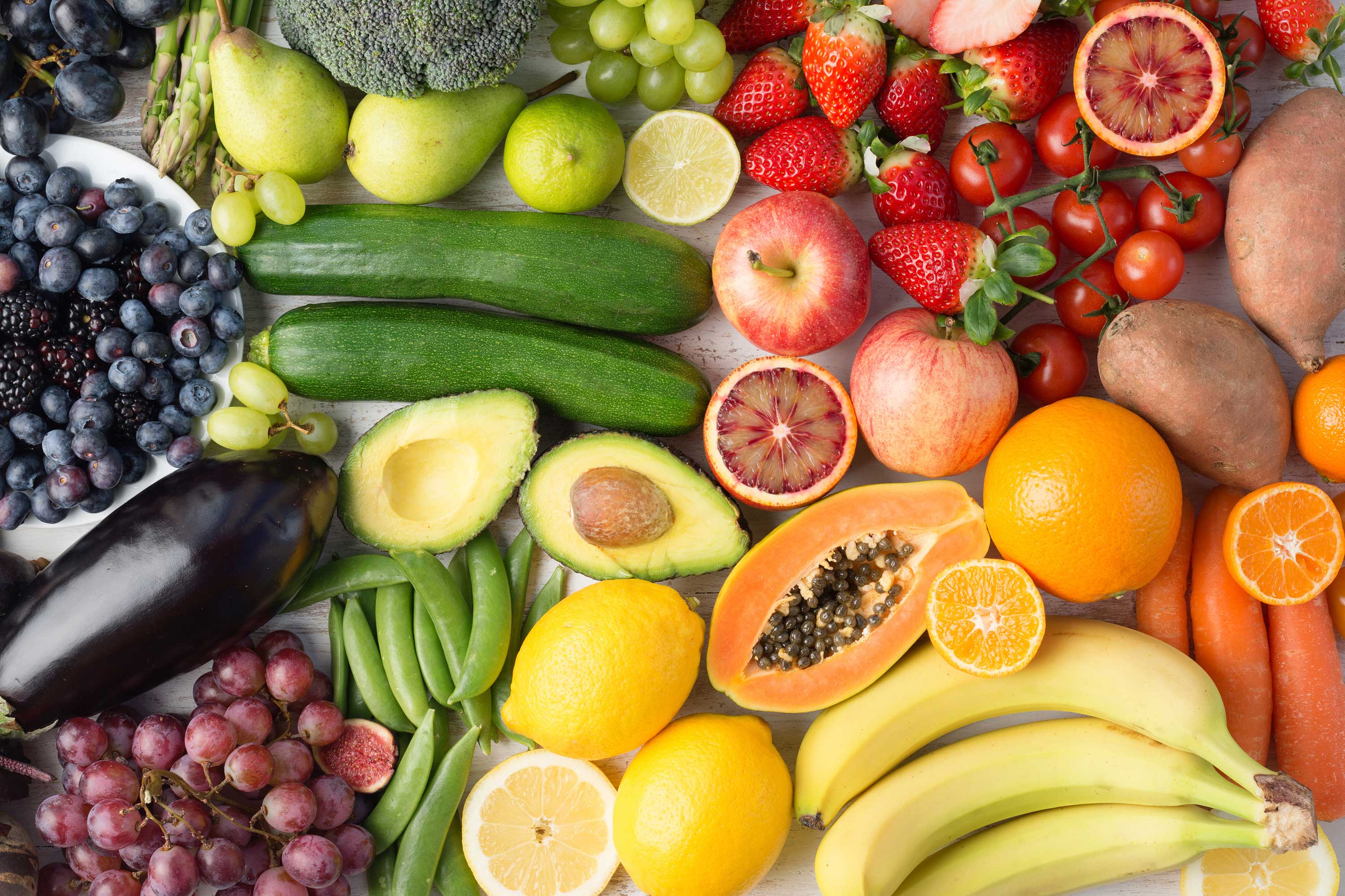
Happy New Year! 🎉
January is often about resolutions—but this year, there’s something genuinely new and important to talk about.
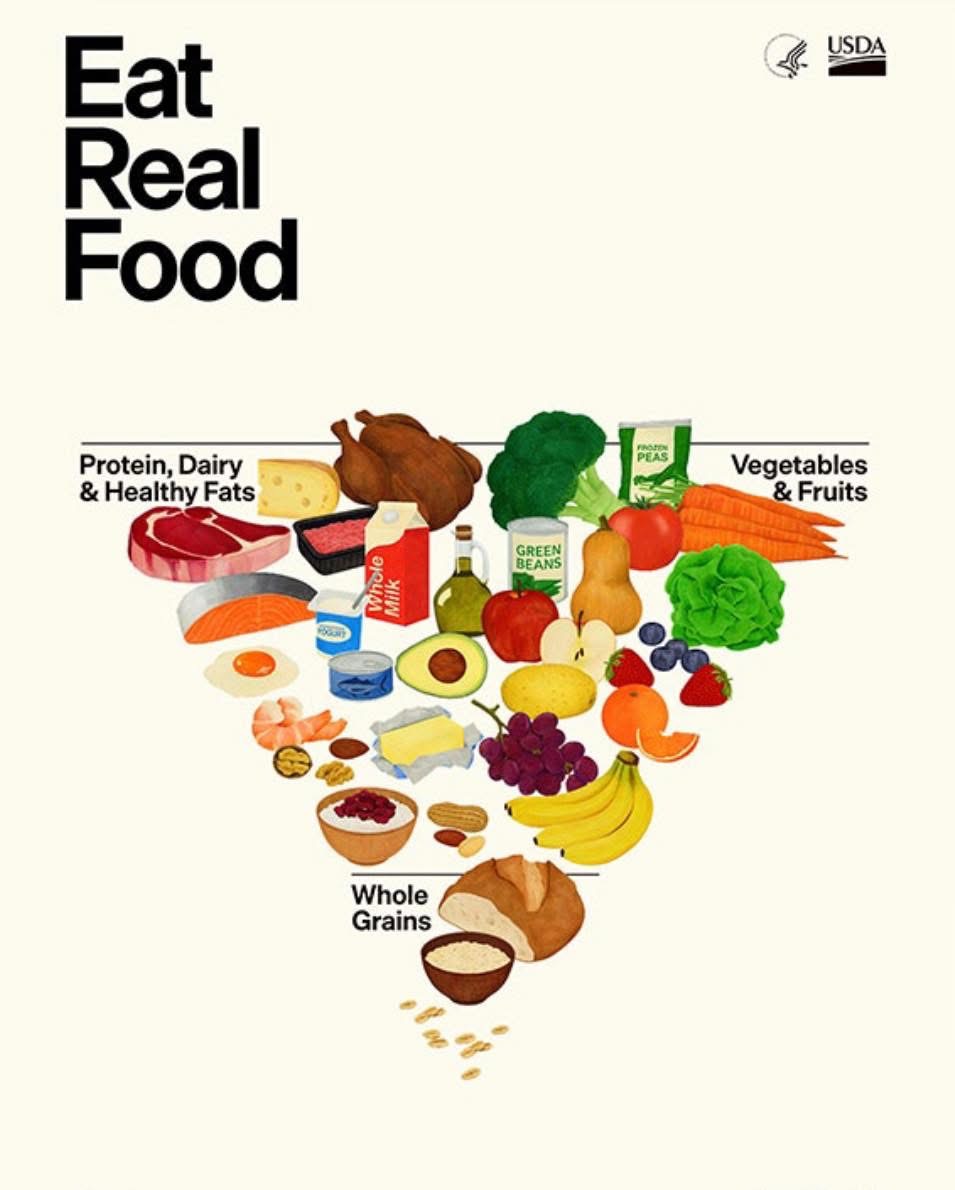
This month, the 2025–2030 Dietary Guidelines for Americans were released, and for the first time in my professional lifetime, the U.S. government is clearly acknowledging something many of us in healthcare have been saying for years:
What we eat matters more than how many calories we count.
What’s changed—and why it matters
According to leaders in the nutrition and medical community, including Dr. Mark Hyman, a renowned physician and author who focuses on functional medicine and nutrition and who is a medical expert, I trust and believe in, these Guidelines represent a real course correction after decades of advice that coincided with rising rates of obesity, diabetes, and diet-driven chronic disease.
Here’s what stands out:
Highly processed foods are no longer the foundation
The new Guidelines explicitly discourage diets built around ultra-processed foods—those high in refined grains, added sugars, industrial oils, and additives. These ultra-processed foods are products that are industrially manufactured and contain ingredients you wouldn’t typically use in your kitchen at home. They’re designed for shelf life, hyper-palatability, and convenience—not health. These ultra-processed foods usually contain refined grains, added sugars, industrial seed oils, additives, emulsifiers, and preservatives.
It’s recommended to avoid refined grains, some common examples are: white bread and white rolls, regular pasta made from refined flour, crackers and snack chips, pastries, cookies, cakes, breakfast cereals made with refined flour. These grains have had most of their fiber, vitamins, and minerals removed. The issue with refined grains are that they digest quickly, spike blood sugar, and don’t keep you full for long.
Also, avoid added sugars that are added during processing—those not naturally occurring sugars in fruit or dairy. Say no to sugary breakfast cereals, sweetened yogurts, soda, sweet tea, lemonade, flavored coffee drinks, candy, cookies and snack cakes. Hidden names for sugar are: honey or agave (still added sugar), high-fructose corn syrup, cane sugar, evaporated cane juice, dextrose, maltose and fructose. Added sugars can become a health issue, because they contribute to insulin resistance, inflammation, and energy crashes.
Industrial Oils (Seed Oils) are also not recommended because they are highly refined oils extracted using heat and chemicals. Some common examples are Sunflower or Safflower oil, Soybean oil, Corn oil, Canola oil and Cottonseed oil. It’s always best to read food labels to detect these unfavorable ingredients that are not conductive for good health. They’re highly processed and can promote inflammation when consumed in excess. These oils are commonly found in Fast food, Fried foods, Packaged snacks, Salad dressings and Frozen meals.
We should also steer clear of additives and emulsifiers, which are Ingredients added to improve texture, shelf life, or appearance. Some common examples are Thickeners and stabilizers, Artificial flavors and colors, Emulsifiers (polysorbate 80, carrageenan) and Preservatives (BHA, BHT). They are usually found in Flavored dairy products, Packaged sauces and dressings, Protein bars and shakes and Ice cream. The issue with additives and emulsifiers is that they may negatively affect gut health and appetite regulation.
What often confuse clients the most are ultra-processed “health foods”, which are foods such as Protein bars with long ingredient lists, “Low-fat” or “diet” foods, Meal replacement shakes, Gluten-free packaged snacks or Keto or “fat-free” desserts. Here’s a clue, if it looks healthy but reads like a chemistry experiment, it’s likely ultra-processed.
Protein is restored to its rightful place
Protein is now clearly emphasized for metabolic health, muscle maintenance, blood sugar control, and healthy aging. The 2025–2030 Dietary Guidelines for Americans mark a meaningful shift. Protein is once again clearly emphasized—not as a bodybuilding nutrient, but as a cornerstone of health across the lifespan.
Protein plays a critical role in metabolism. It has the highest thermic effect of any macronutrient, meaning your body uses more energy to digest and utilize it. Adequate protein intake also helps preserve lean body mass, which is one of the strongest predictors of resting metabolic rate. When protein intake is too low, people often experience, difficulty maintaining weight loss, increased hunger and cravings, loss of muscle mass and slower metabolism.
Muscle is not just about appearance—it’s about function, strength, and longevity.
Protein is essential for:
- Building and repairing muscle tissue
- Maintaining strength during weight loss
- Preventing age-related muscle loss (sarcopenia)
For the first time, the Guidelines clearly recognize muscle maintenance as a public health priority, not just an athletic goal. This is especially important for women, older adults, and individuals pursuing weight loss, where muscle loss is often overlooked.
Protein helps slow digestion and reduce rapid blood sugar spikes when eaten with carbohydrates. It also improves satiety, helping people feel fuller for longer and reducing the urge to snack on refined carbohydrates.
Adequate protein intake has been shown to support:
- Improved insulin sensitivity
- More stable energy levels
- Better glycemic control
This is why the Guidelines now acknowledge that macronutrient balance—not just calories—matters, particularly for individuals with insulin resistance, prediabetes, or diabetes.
As we age, our protein needs increase—not decrease.
Adequate protein intake supports:
- Muscle preservation
- Bone health
- Immune function
- Independence and quality of life
The updated Guidelines emphasize protein as a key nutrient for healthy aging, helping reduce frailty and maintain physical function well into later decades of life.
The return of protein to its rightful place reflects a broader truth in nutrition science: Health is built on nourishment, not restriction.
Focusing on adequate, high-quality protein helps support metabolism, muscle, blood sugar control, and long-term health—without relying on extreme diets or calorie obsession.
As a dietitian, this shift reinforces what I focus on every day with clients:
eating enough of the right foods to support the body, not fight it.
Importantly, the Guidelines also emphasize protein quality and personalization. Protein needs vary based on age, activity level, health conditions, and goals. What works for one person may not work for another—and that’s where individualized nutrition guidance becomes essential.
Full-fat dairy is no longer the villain
The Guidelines acknowledge that full-fat dairy can fit into a healthy diet for many people, rather than defaulting to low-fat-only recommendations. However, speaking from a dietitian nutritionist’s point of view, my suggestion is to keep accurate serving sizes in check. One serving of fat is equivalent to one teaspoon of butter, Olive oil or Coconut oil, which has ~5 grams of fat, a totaling 45 calories. It’s not about the calories, but you just can’t eat too much of a good thing.
The 2025–2030 Dietary Guidelines reflect a shift toward food quality, nutrient density, and metabolic health, rather than fear of fat. Fat slows digestion and helps you feel full longer. It helps to reduce hunger between meals, helps stabilize energy levels and decrease the urge to snack on refined carbohydrates. This is especially helpful for people who feel constantly hungry on low-fat diets, weight management and blood sugar regulation.
What’s so healthy about full- fat dairy is that it helps us to absorb key nutrients, such as Vitamin A, Vitamin D, Vitamin K2 and Calcium.
Dairy fat Is not the same as processed fat and Guidelines now better distinguish whole foods from ultra-processed foods. Dairy fat contains unique fatty acids that may be cardioprotective, comes naturally packaged with protein, minerals, and bioactive compounds, which is not the same as industrially processed fats.
Lower-carbohydrate approaches are acknowledged
For the first time, the Guidelines recognize that some individuals—especially those with chronic conditions like diabetes or insulin resistance—may benefit from lower-carbohydrate eating patterns.
The 2025–2030 Dietary Guidelines mark a shift away from one-size-fits-all advice by acknowledging that lower-carbohydrate approaches can be appropriate—and beneficial—for some individuals, particularly those with chronic disease.
The new guidelines illustrate that carbohydrate needs vary from person to person, lower-carbohydrate eating patterns may benefit some individuals, especially relevant for people with metabolic conditions and food quality matters more than carb quantity alone. The guidelines are not emphasizing that Keto is the only healthy diet, or everyone should eat low-carb and carbohydrates are “bad”. These new guidelines have more flexibility with their recommendations and it takes into account of each individual response.
Why this is good news for our health
This shift matters because it aligns more closely with what we see in real clinical practice:
- Better blood sugar control
- Improved lipid profiles
- More sustainable weight management
- Greater focus on nutrient quality, not just calorie quantity
In short: food quality matters.
A key reminder
While these Guidelines are the most scientifically defensible we’ve seen, they are still guidelines. Personalization remains essential. Your medical history, lifestyle, preferences, and goals all matter—and one-size-fits-all nutrition never truly works.
As always, my goal is to help you translate this science into a way of eating that works for your body and your life.
Here’s to a year of informed choices, real nourishment, and sustainable health.
The new year is the perfect time to reset—not with restriction, but with understanding.
With the release of the new 2025–2030 Dietary Guidelines, many people are asking:
What should I actually be eating?
How do I personalize this for my health conditions, goals, or lifestyle?
That’s where individualized nutrition counseling comes in.
During our sessions, we focus on:
✔ Translating science into real-life meals ✔ Building sustainable habits (not short-term fixes)
✔ Supporting energy, metabolism, and long-term health
✔ Creating a plan that fits your body and your life
If you’ve been waiting for the “right time” to get support—this is it.
February appointments are now available. Reply to this email or book through my website to get started.
Here’s to a strong, nourished year ahead,
Patty Martin, MPH, RD, LD